

Barnyard Millet Recipes: 7 Easy Kuthiraivali Dishes for Breakfast, Lunch and Fasting Days
Barnyard millet recipes start with one method: rinse the grain, soak it for 20 to 30 minutes, then cook it with 2 to 2.5 parts water. Kuthiraivali cooks in 10 to 15 minutes after soaking, so pongal, upma, kanji, khichdi, curd rice, and pulao fit easily into a weekday.
Quick facts before you cook
- Cooking time: 10 to 15 minutes after a 20 to 30 minute soak.
- Water ratio: 1:2 for upma and pulao, and 1:2.5 for pongal, khichdi and curd rice.
What is barnyard millet (kuthiraivali), and what are its other names?
Barnyard millet is a small, pale grain called kuthiraivali in Tamil, oodalu in Kannada, udalu in Telugu, and sanwa or samo rice in North India. It is one of the many types of millets grown across India.
How to cook barnyard millet: the base method
These kuthiraivali recipes all start from the same five steps.
- Rinse the grain 2 to 3 times until the water runs mostly clear.
- Soak for 20 to 30 minutes, then drain.
- Measure the water for the dish: 1:2 for firm grains and 1:2.5 for soft grains.
- Bring the water to a boil, add the grain and salt, cover, and simmer for 10 to 15 minutes, or pressure cook for 2 whistles.
- Rest covered for 5 minutes, then fluff with a fork.
Barnyard millet recipes for breakfast
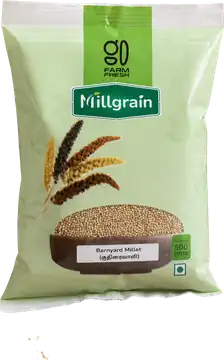
1. Kuthiraivali pongal
Serves 3 to 4 | 25 minutes
You need: 1 cup barnyard millet, 1/4 cup moong dal (pasi paruppu), 3 cups water, 1 teaspoon pepper, 1 teaspoon cumin, 1 teaspoon grated ginger (inji), 10 curry leaves (karuvepillai), 8 cashews, 2 tablespoons ghee (nei), and salt.
- Pressure-cook the soaked millet, dal, water, and salt for 3 whistles, then mash lightly.
- Heat the ghee and temper the pepper, cumin, ginger, curry leaves, and cashews.
- Stir the tempering in and serve hot with sambar or coconut chutney.
Kuthiraivali pongal turns creamy because barnyard millet cooks softer than most other millets.
2. Barnyard millet upma
Serves 2 to 3 | 20 minutes
You need: 1 cup barnyard millet, 2 cups water, 1 tablespoon oil, 1 teaspoon mustard, 1 tablespoon urad dal (ulundhu), 1 onion, 1/2 cup chopped vegetables, 1 green chilli, curry leaves, and salt.
- Dry roast the millet for 2 to 3 minutes and set it aside.
- Temper the mustard, dal, chilli, and curry leaves in oil, then sauté the onion and vegetables.
- Add the water and salt, stir in the millet, cover, and simmer for 10 to 12 minutes.
Barnyard millet upma stays fluffy when the water stays at 1:2 ratio, and minimally processed barnyard millet keeps the grains separate.
3. Kuthiraivali kanji, sweet or savoury
Serves 2 | 25 minutes
You need: 1/4 cup barnyard millet and 2 cups water. For the sweet bowl, add 2 tablespoons jaggery (vellam) and a pinch of cardamom. For the savoury bowl, add 1/2 cup buttermilk (mor), salt, and cumin.
- Simmer the soaked millet in the water for 15 to 20 minutes until soft, then mash lightly.
- Stir in the jaggery and cardamom, or the buttermilk, salt, and cumin.
Kuthiraivali kanji is a gentle first meal for children and elders, and a bowl of kuthiraivali pongal works the same way. Mornings with less time can use an instant congee mix in place of simmering from scratch.
4. Barnyard millet idli and dosa
Serves 4 | 20 minutes of work plus overnight fermentation
You need: 2 cups barnyard millet, 1 cup urad dal, 1/2 teaspoon fenugreek (vendhayam), and salt.
- Soak the millet and the dal with the fenugreek, separately for 4 to 5 hours.
- Grind the dal to a fluffy batter and the millet to a fine batter, then mix with salt.
- Ferment for 8 to 10 hours, then steam in idli moulds for 10 to 12 minutes.
- For dosa, thin the batter with water and cook on a hot tawa until crisp.
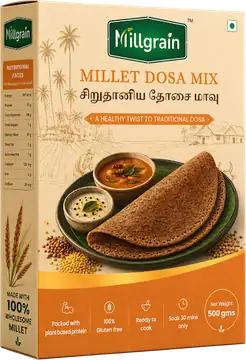
On days without time for grinding, a ready millet dosa mix gives a similar dosa from an instant batter.
Kuthiraivali recipes for lunch: khichdi, curd rice and pulao
These kuthiraivali recipes pack well for lunch, because the grain stays soft for hours.
5. Barnyard millet khichdi
Serves 3 | 25 minutes
You need: 1 cup barnyard millet, 1/3 cup moong dal, 3 cups water, 1 cup chopped vegetables, cumin, turmeric, ghee, and salt.
- Crackle the cumin in ghee and sauté the vegetables for 2 minutes.
- Add the soaked millet, dal, turmeric, salt, and water.
- Pressure cook for 3 whistles and mash lightly.
6. Kuthiraivali thayir sadam (curd rice)
Serves 2 | 20 minutes plus cooling
You need: 1 cup barnyard millet cooked at 1:2.5, 1 cup thick curd (thayir), salt, 1 teaspoon mustard, 1 dried chilli, curry leaves, and 1 teaspoon grated ginger.
- Mash the cooked millet while warm and let it cool completely.
- Mix in the curd and salt.
- Temper the mustard, chilli, ginger, and curry leaves, then stir in.
7. Barnyard millet vegetable pulao
Serves 3 | 30 minutes
You need: 1 cup barnyard millet, 2 cups water, 1 sliced onion, 3/4 cup chopped carrot, beans and peas, 1 tablespoon ghee, whole spices (bay leaf, cinnamon, clove, cardamom), 1 green chilli, a few mint leaves and salt.
- Heat the ghee, add the whole spices, then sauté the onion, chilli and vegetables.
- Add the water, salt, and mint, and bring to a boil.
- Stir in the soaked millet, cover and simmer for 10 to 12 minutes, then rest for 5 minutes and fluff.
Sama rice recipes: using barnyard millet on fasting days
Sama rice is the fasting-day name for barnyard millet, so sama rice recipes follow the same method as above. Rock salt (sendha namak) replaces regular salt, and each family follows its own rules on spices and dals. The pongal, khichdi, and curd rice all work as sama rice recipes this way, while ragi, pulses, and other Pure Organic foods staples suit regular days.
How to fix sticky or mushy barnyard millet
- Extra water: stay at 1:2 for upma and pulao, and reduce the water by a quarter cup if pongal turns sticky.
- Stirring: one gentle stir after adding the grain is enough, since extra stirring releases starch.
Quick tips for cooking kuthiraivali
- Cook a double batch of plain millet, refrigerate it within two hours, and use it within 2 to 3 days for khichdi, curd rice or kuthiraivali kanji.
- Dry roast a jar of grain ahead of time, so barnyard millet upma on a busy morning needs only boiling water and tempering. Most barnyard millet recipes also taste better with a spoon of ghee.
- Pair each bowl with dal, sambar, or curd. The barnyard millet benefits article lists what the grain adds nutritionally.
- Rotate barnyard millet with other grains through the week. A shelf of whole grain staples makes the rotation easy to plan.
Frequently asked questions
Is kuthiraivali the same as sama rice, and can I use it for fasting?
Yes, sama rice and kuthiraivali are the same grain, also sold as samo rice and sanwa millet. It is widely eaten on fasting days such as Navratri, so many barnyard millet recipes double as fasting dishes when made with rock salt and spices that follow your family’s rules.
How much water do barnyard millet recipes like pongal and upma need?
Use 1:2.5 for pongal, khichdi, and curd rice, and 1:2 for upma and pulao, after a 20 to 30 minute soak. If a dish turns sticky, reduce the water by about a quarter cup next time.
Can I make barnyard millet idli or dosa without urad dal?
Urad dal gives the batter its lift and binding, so millet alone tends to give a dense idli, and most barnyard millet recipes using batter follow the same ratio. One part urad dal to two parts millet is a good starting point, with fenugreek to help fermentation.
Is barnyard millet better than rice for blood sugar?
Barnyard millet generally has a lower glycaemic index than polished rice, and the millet vs rice comparison covers the numbers. Portion size still matters, so people managing diabetes can ask their doctor or dietitian how much suits them.
Can I mix barnyard millet with ragi or foxtail millet in one dish?
Yes, barnyard millet recipes such as dosa or idli batter can blend barnyard millet with a smaller share of ragi or foxtail millet. Ragi takes longer to cook, so soak it longer or use it as flour.